Why Do Korean Restaurants
Serve So Many Side Dishes?
What Foreign Visitors Should Know About Banchan in Korea
Why Is the Table So Full in Korean Restaurants?
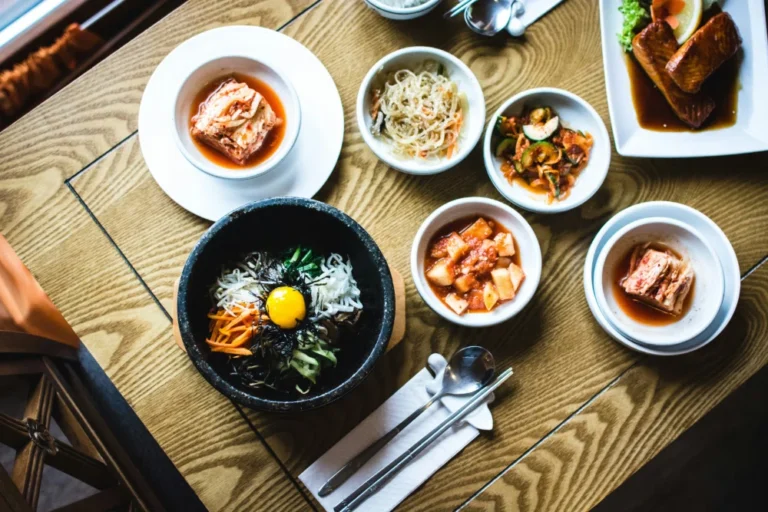
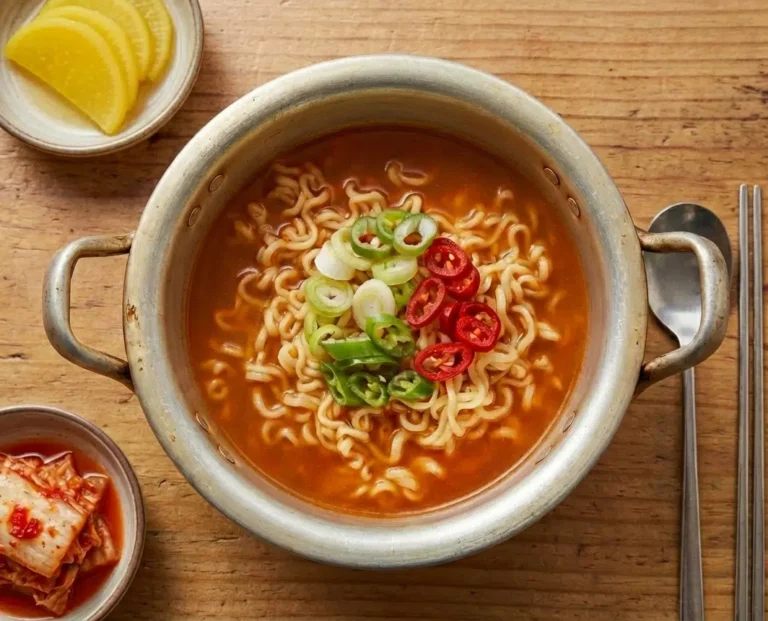
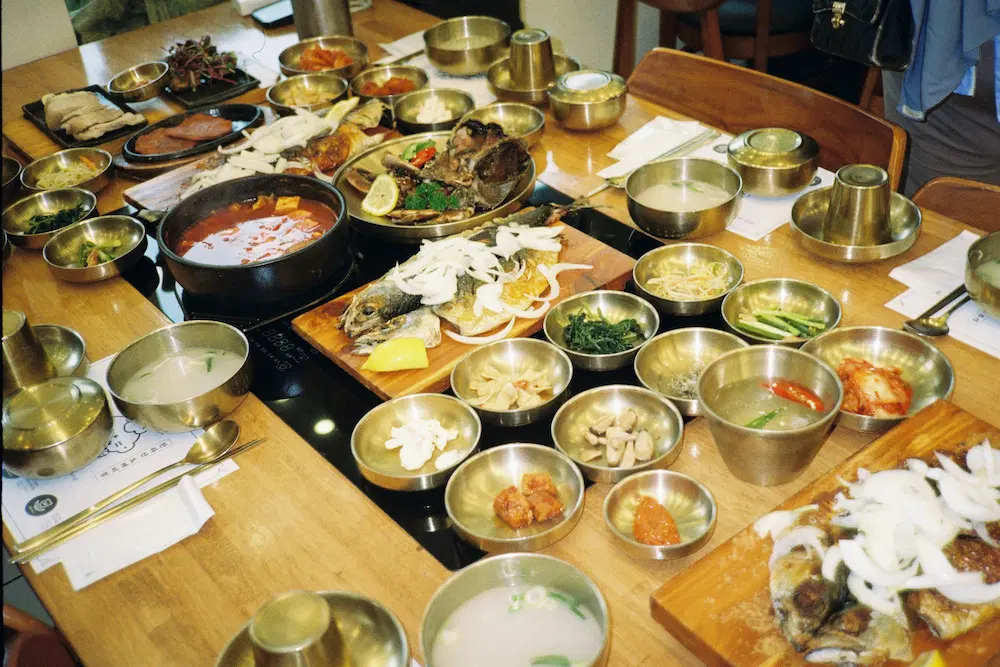
One of the first things that surprises many visitors at a Korean restaurant is how quickly the table fills up. You order a main dish — perhaps grilled meat, a bubbling stew, noodles, or a bowl of rice. Before the main dish even arrives, several small plates begin to appear: kimchi, seasoned vegetables, pickled radish, stir-fried fish cakes, or other dishes.
Then comes another surprise. At many restaurants, you can ask for more without paying extra. So why do Korean restaurants serve so many side dishes? Are they really free? And what exactly are these small dishes for?
These dishes are called Banchan (반찬). They are not simply complimentary extras or decorative appetizers. Banchan is a part of how a Korean meal is structured: rather than centering the entire meal around one main dish, Korean dining traditionally brings rice, soup or stew, a main dish, and several smaller dishes together as one meal. That difference is the key to understanding why a Korean restaurant table can look so full.
What Is Banchan?
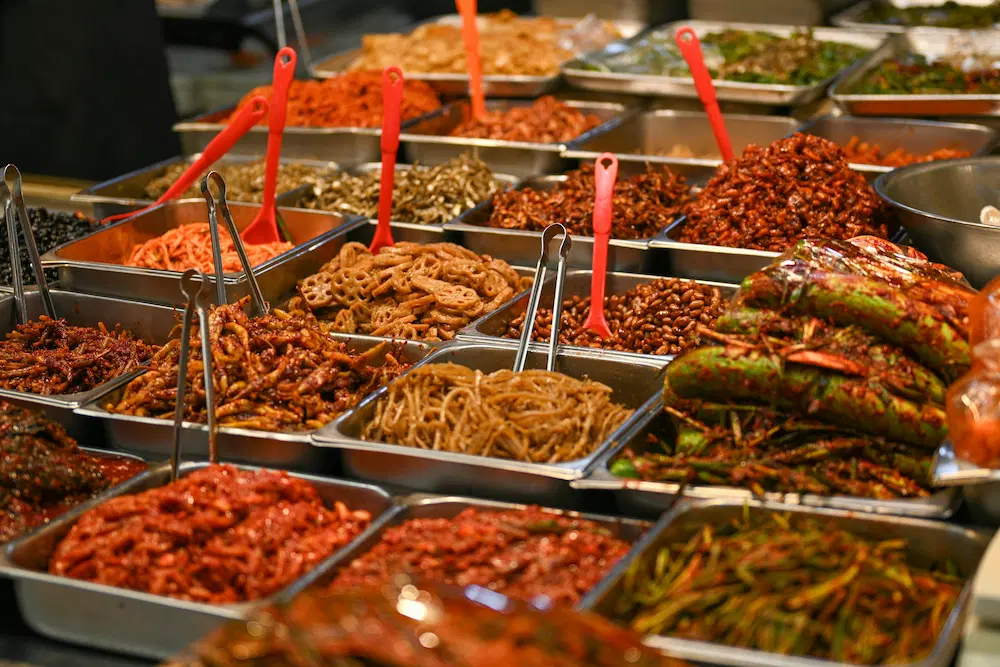
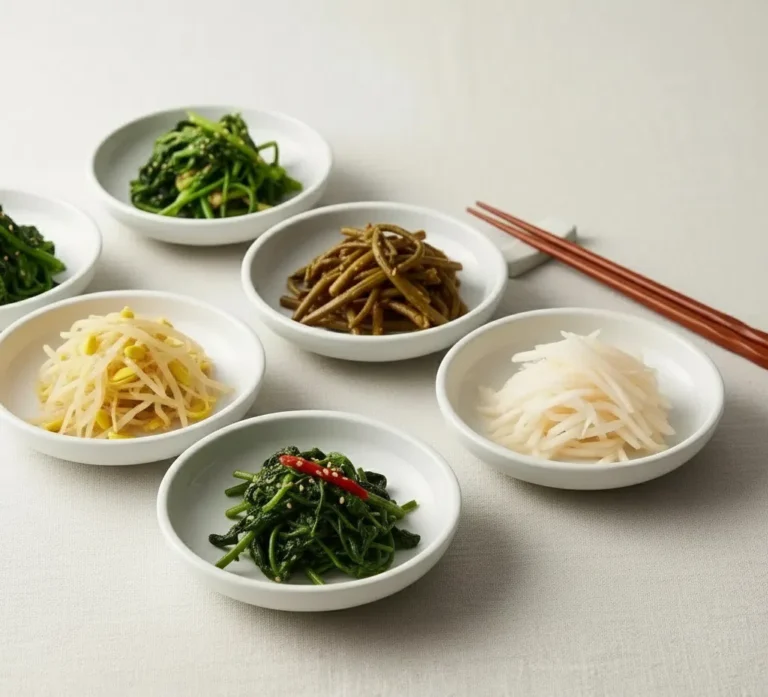
Banchan (반찬) refers to the small dishes served alongside rice and a main dish in a Korean meal.
Depending on the restaurant, banchan might include kimchi, seasoned vegetables, pickled vegetables, fish cake, tofu, eggs, or other small dishes. The selection varies widely according to the type of restaurant and the main food being served.
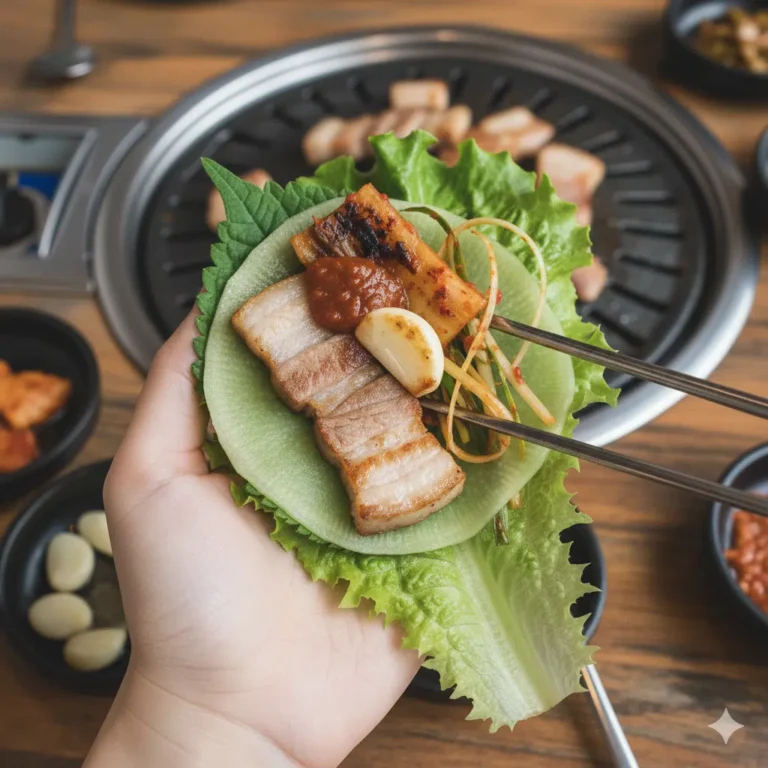
A Korean barbecue restaurant may offer kimchi, pickled radish, seasoned vegetables, lettuce, and dipping sauces — many of which are used alongside grilled meat in ssam. A soup restaurant may serve only a few simple side dishes. A home-style baekban (백반) meal can come with a much larger selection.
There is no fixed number of banchan and no single combination that every Korean restaurant follows. What matters is the role they play. Banchan is not simply an additional side chosen separately from the main dish. It is one of the components that makes up the meal itself, adding different flavors, textures, and ingredients to rice and the main food.
Are Side Dishes Really Free in Korea?
Usually, yes. At most Korean restaurants, basic banchan is included in the price of your meal. You normally do not order or pay for each side dish separately.
This is why thinking of banchan as simply “free side dishes” can be slightly misleading. From the restaurant’s perspective, basic banchan is generally part of what you are paying for when you order the meal.
The exact policy varies by restaurant. Some places offer only a few basic side dishes, while others provide a larger selection. Certain dishes may also cost extra if they require more expensive ingredients or substantial preparation. But for everyday banchan such as kimchi or seasoned vegetables, an additional charge is generally not expected.
Can You Get Free Refills on Banchan?
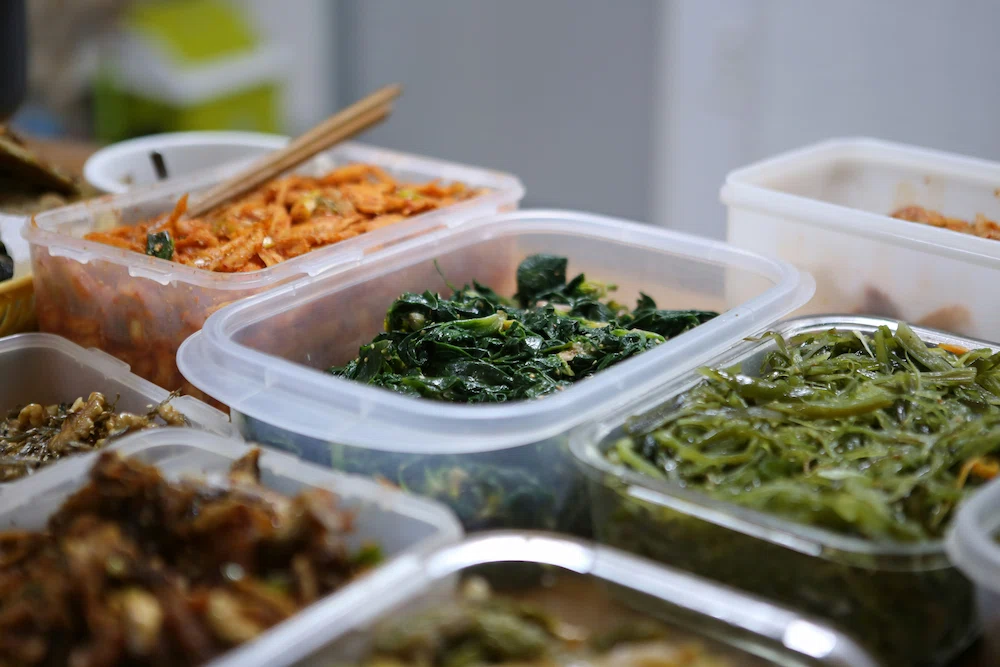
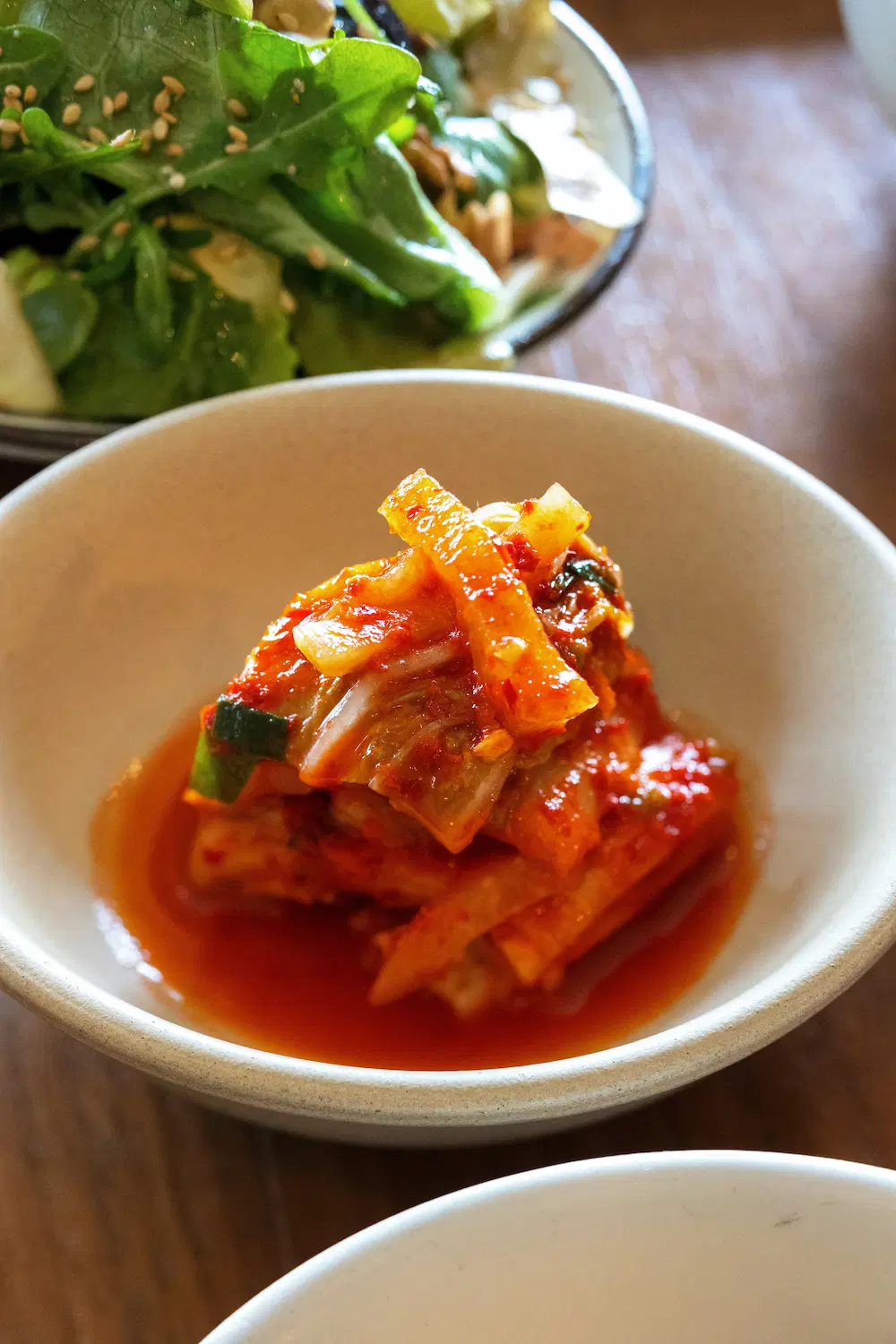
Often, yes. At many Korean restaurants, asking for more of the basic side dishes is completely normal. Some restaurants have a self-service station where you can refill certain dishes yourself, while others ask you to request another serving from the staff.
You can simply say:
“반찬 좀 더 주세요.” [ Banchan jom deo juseyo ]
“Could I have some more side dishes, please?”
Or, if you want a specific dish:
“김치 좀 더 주세요.” [ Gimchi jom deo juseyo ]
“Could I have some more kimchi, please?”
Pro Tip: What Is a Self-Service Banchan Bar?
At some Korean restaurants, you may see a small station marked “셀프” (self).
These stations allow customers to refill certain side dishes themselves, such as kimchi, seasoned vegetables, pickled radish, or sauces. If you see other customers using the station, you can generally do the same.
This system is particularly common in casual restaurants, where allowing customers to refill simple side dishes themselves is an easy way to keep the meal moving without requiring staff to make repeated trips to each table. It is a small example of a broader preference for efficiency in everyday Korean life.
Why Do Korean Restaurants Serve So Many Side Dishes?
This is where banchan becomes more interesting than the idea of “free food.”
A Korean meal is traditionally organized around several components eaten together. Bap (밥), or rice, forms an important foundation, while soup or stew, a main dish, and various banchan add different flavors and textures to the meal.
In other words, the meal is not necessarily built around one large central dish with a few optional sides. Instead, several different foods come together to make the meal. A bowl of rice might be eaten with spicy kimchi, mild seasoned vegetables, a piece of fish, or a bite of grilled meat — much like the mix of ingredients you see in a dish such as bibimbap. The combinations can change from one bite to the next.
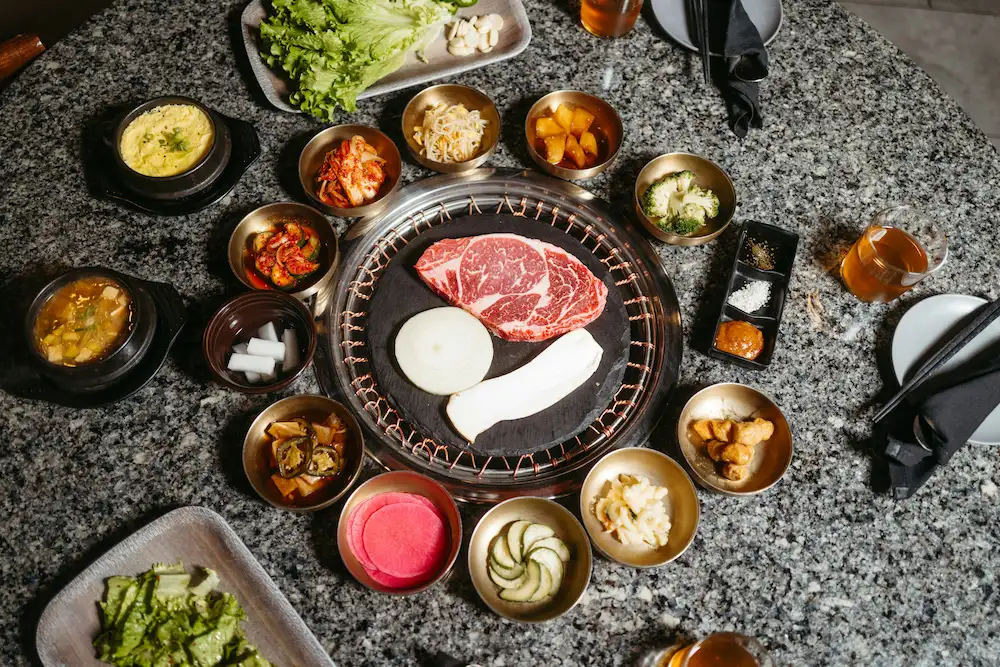
This is one reason a Korean table can look so abundant even when the main dish itself is relatively simple. The variety comes not only from the amount of food, but from the number of different flavors and textures available throughout the meal. Banchan is therefore less like an appetizer or an optional side dish and more like one part of a larger meal.
That is also why the number of dishes can vary so much. A simple noodle restaurant does not need the same selection as a traditional home-style meal. The banchan changes according to the food and the style of the restaurant.
Why Are Banchan Dishes Often Placed in the Center?
There is another detail visitors may notice: banchan is often placed in small dishes around the table, with several dishes accessible to everyone.
This does not mean that sharing banchan is the defining origin of Korean cuisine. Traditional Korean meals could also be served as individual table settings, with dishes arranged according to the type of meal and occasion.
The shared table arrangement seen in many modern restaurants is better understood as part of contemporary Korean dining. When people eat together, many dishes are placed within everyone’s reach, while each person still has their own bowl of rice or soup.
This creates an interesting combination: the meal can be individually eaten but collectively arranged. The important point is not simply that Koreans share side dishes. It is that several different dishes are brought together to form one meal.
What Should Foreign Visitors Know About Banchan?
The easiest way to navigate banchan is to remember a few simple things.
- You usually do not need to order basic banchan separately. It normally arrives with the meal.
- Refills are often available. Ask the staff if you want more, or look for a “셀프” station.
- The number of side dishes varies. A noodle restaurant may offer only one or two, while a traditional meal may come with many more.
- Banchan is part of the meal. It is not simply a collection of complimentary appetizers.
You may also come across restaurants that charge for certain additional portions or have different refill policies. So while “free refills” is common for basic banchan, it is not a universal rule for every dish in every restaurant.
Frequently Asked Questions About Korean Side Dishes
Is banchan free in Korean restaurants
Usually, yes. Basic banchan is usually included in the price of the meal. You normally do not pay separately for each small side dish.
Can you get free refills of banchan?
Often, yes. Basic side dishes such as kimchi and seasoned vegetables are commonly refillable. Some restaurants have self-service stations, while others require you to ask a server. More expensive dishes may have different rules.
Is it rude to ask for more side dishes in Korea?
No. Asking for more basic banchan is generally considered normal in Korea. You can politely say, “반찬 좀 더 주세요” (Banchan jom deo juseyo) to ask for more side dishes.
Why do Korean restaurants serve so many side dishes?
Because banchan is part of the structure of a Korean meal. Rice, soup or stew, a main dish, and several smaller dishes are traditionally brought together to create variety in flavors and textures.
Why do some Korean restaurants serve only a few side dishes?
The number of banchan depends on the restaurant, the main dish, and the style of meal. A simple soup or noodle restaurant may serve only one or two types of kimchi or vegetables, while a home-style Korean meal can include a much wider selection.
A Different Way to Build a Meal
For a first-time visitor, a Korean restaurant table can look surprisingly generous. One main dish arrives, followed by several small plates, and some can be refilled without an additional charge. But the interesting part is not the number of dishes on the table. It is the way they come together to make a meal.
A Korean meal is often built from several components — rice, soup or stew, a main dish, and banchan — that come together at the same time. The small dishes are there to add variety to the meal, not simply to accompany one “main” item.
Once you see banchan this way, a full Korean restaurant table starts to make much more sense. What first looks like a collection of free side dishes is actually part of the meal itself.