Why Korean Cafes Stay Open So Late
How Late-Night Cafes Became Part of Everyday Life in Korea
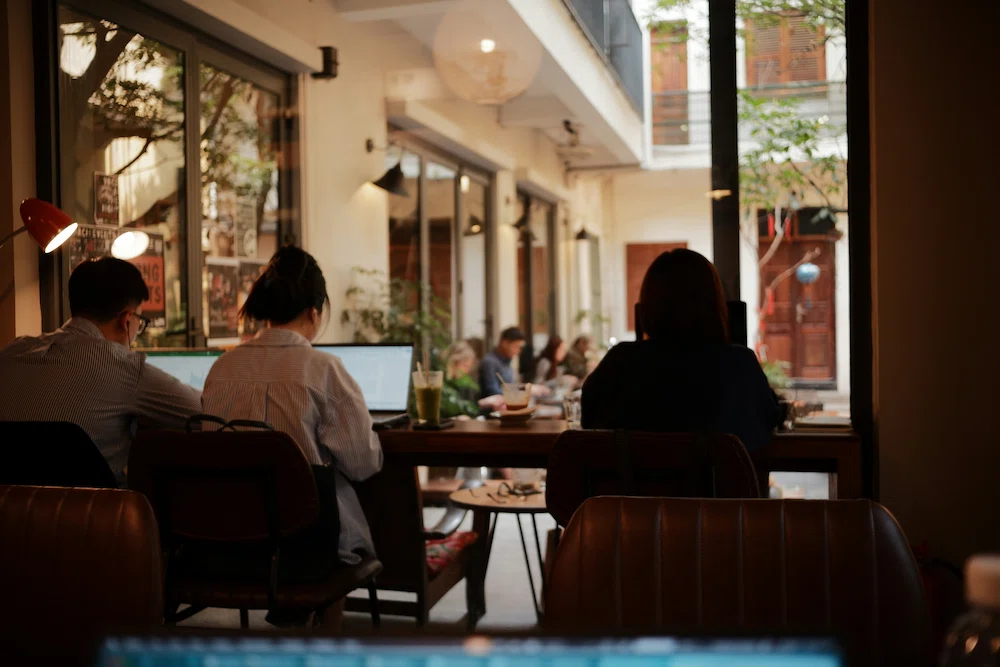
Midnight in Seoul: Not a Bar, but a Cafe
In many cities, late night means bars becoming louder while the cafes slowly empty out. In Seoul, cafes are often still full. Students continue studying with headphones on. Office workers gather around desserts after dinner. Someone edits a presentation beside an iced americano at 11 p.m. A couple quietly talks for hours near the window while delivery scooters continue moving outside.
The unusual part is not simply that cafés stay open late. It is that people genuinely continue using them late into the night. For many visitors, this feels unfamiliar at first. In other countries, cafés are often places people pass through briefly during the daytime. In Korea, they frequently become spaces where people stay, work, recover, study, wait, or continue conversations long after dinner has ended. Late-night cafes are not really exceptions in Korea. They are part of the city’s normal rhythm.
Why Korean Cafes Stay Open So Late
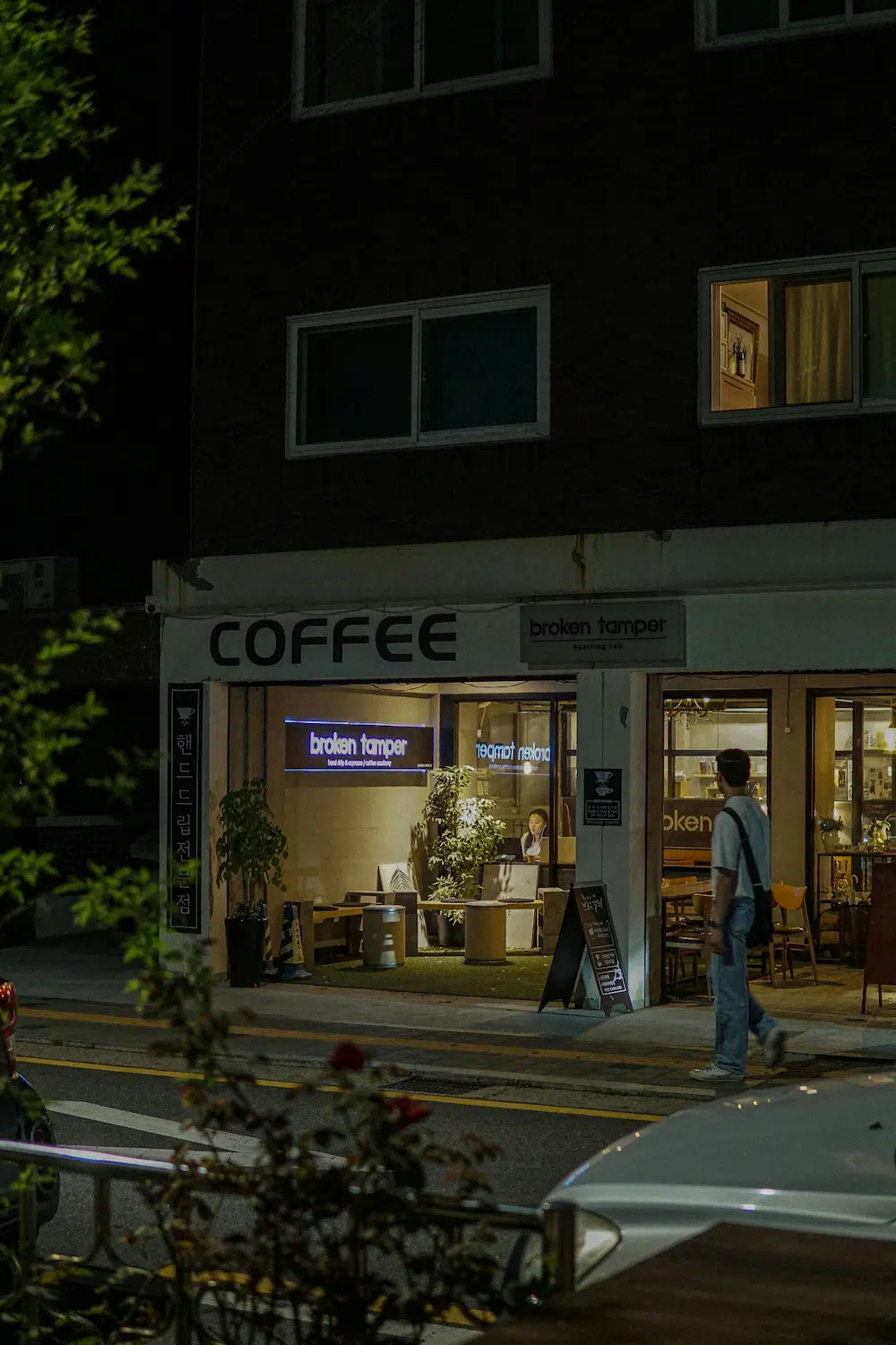
Korea’s late-night cafe culture developed alongside the structure of modern urban life. Dense neighborhoods, long working hours, late dinners, and heavily connected public infrastructure all helped create cities that remain active well after midnight.
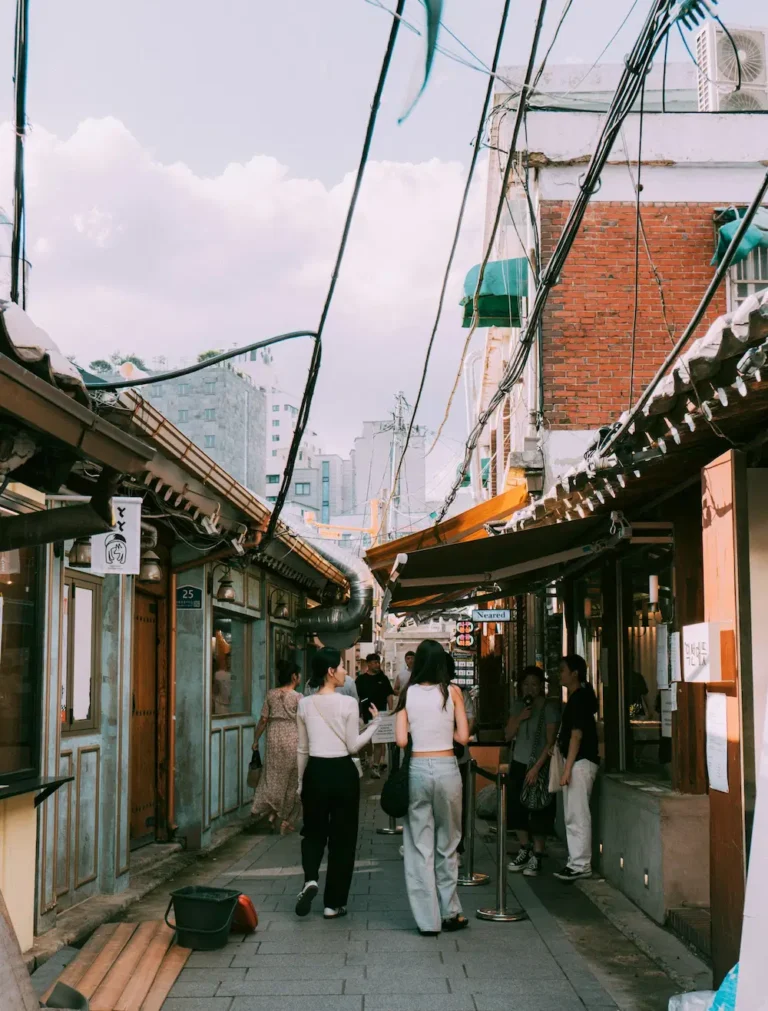
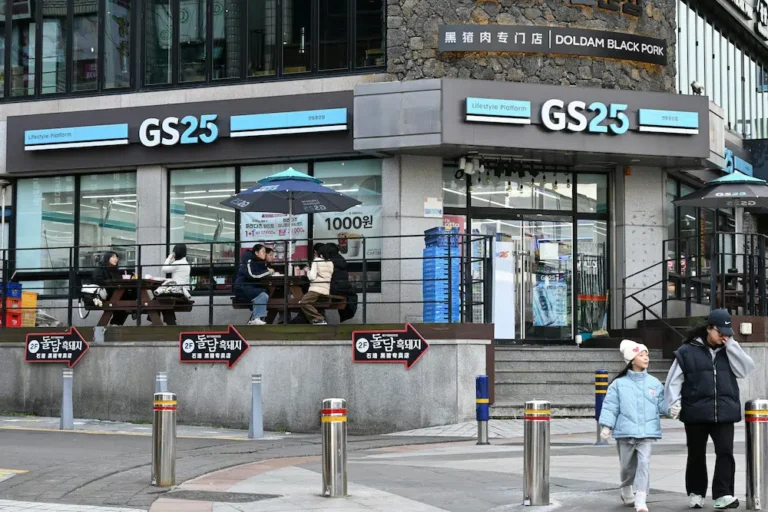
In many parts of Seoul, cafes are not isolated destinations. They exist inside a larger ecosystem of late-night movement. Public transportation runs late. Convenience stores stay open overnight. Food delivery continues deep into the night. Restaurants, dessert cafés, and bars often remain busy long after dinner hours. The city rarely shuts down all at once. Different spaces simply take over different parts of the evening.
Dining culture also plays an important role. In Korea, people often separate meals and conversation into different places. Rather than staying in one restaurant for several hours, groups frequently move elsewhere after eating. If alcohol is not involved, the next stop is often a café.
As a result, cafés absorb a surprising amount of after-dinner life. Coworkers continue conversations over cake and coffee after team dinners. Students review assignments together late into the evening. Friends meet for dessert at hours that might feel unusually late elsewhere. The opening hours themselves are only part of the story. What feels more distinctive is how naturally cafés became integrated into the city’s nighttime rhythm.
Cafes as Korea’s “Borrowed Living Room”
In Korea, cafés are often less about coffee and more about temporarily borrowing space. Of course, using cafés as places to work, study, or spend time alone is no longer unique to Korea. In the era of remote work and digital nomad culture, this became common in many cities around the world. What feels different in Korea is the scale, timing, and infrastructure surrounding it.
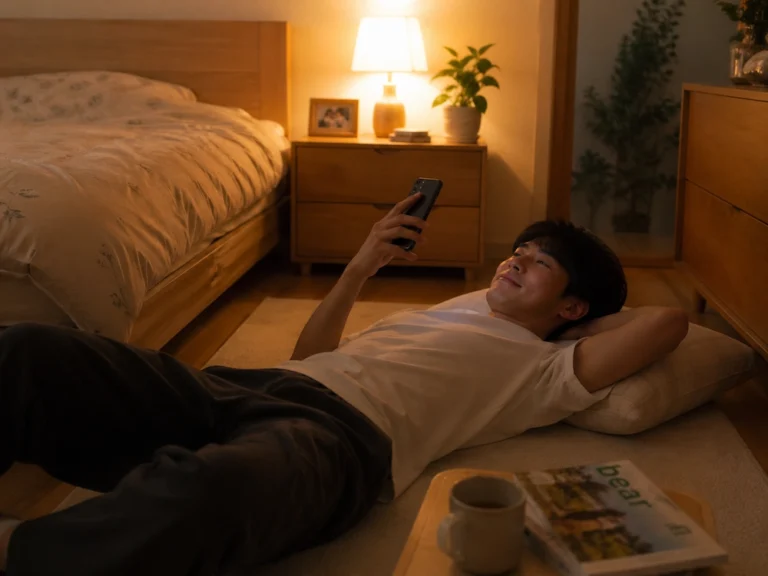
In many Korean cities, cafés function as flexible spaces between home and work — places where people wait, study, work remotely, meet others, or simply spend time without needing a specific reason. Part of this is connected to Korean housing culture. Many students and young professionals live in relatively compact apartments or studio-style rooms where quiet concentration and personal space can be limited. As a result, cafés often become practical alternatives for activities people may not comfortably do at home.
Korea also developed a strong “cagong” (카공) culture — short for studying or working at cafes. For many people, cafés provide something their living environment sometimes cannot: stable Wi-Fi, desk space, air conditioning, background noise, and the subtle motivation of being surrounded by other focused people. People stay for hours without attracting much attention. A student watches online lectures near the window. A freelancer edits videos beside a charging outlet. Someone quietly spends the evening alone with a laptop and dessert after work.
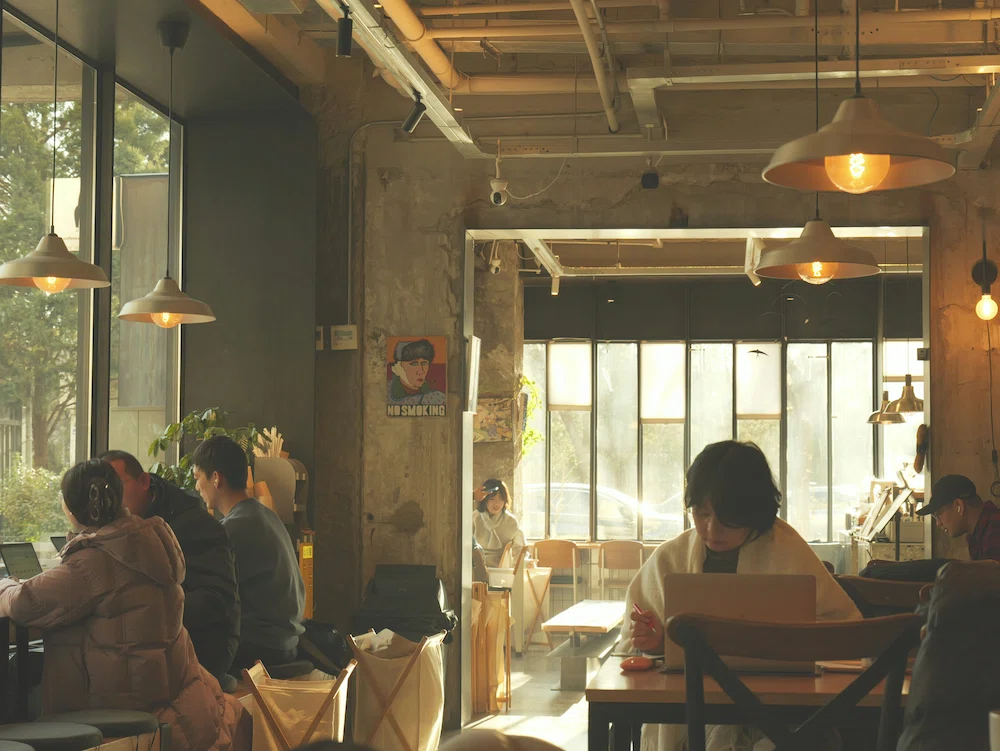
Over time, cafés became deeply integrated into everyday urban routines — not simply as coffee shops, but as spaces people move through throughout the day.
Why Study Cafes Spread Across Korea
Across Korea, study cafes and 24-hour cafes now appear in almost every major neighborhood.
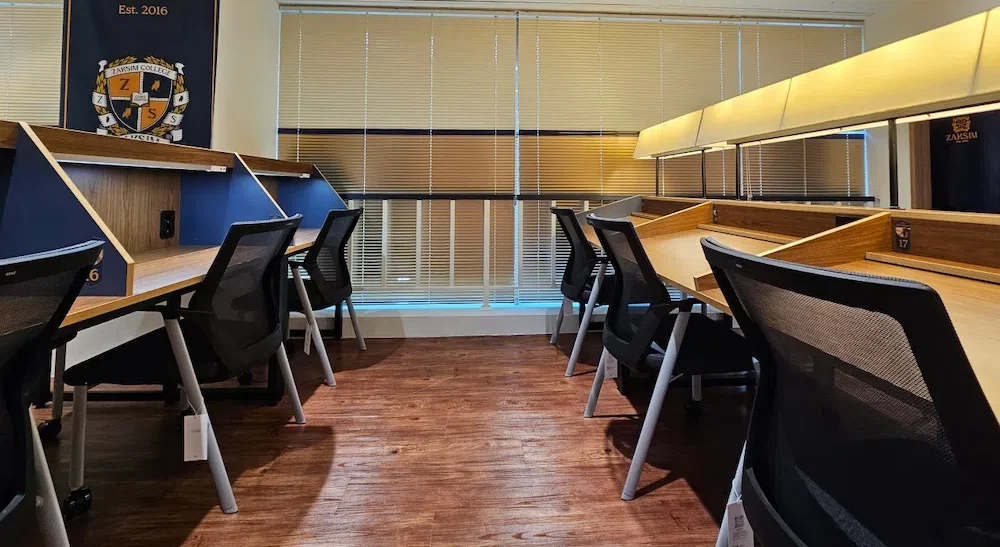
Despite the name, many study cafés feel less like ordinary cafés and more like quiet self-service workspaces. People use them to prepare for exams, attend online classes, finish assignments, edit presentations, or focus alone for several hours at a time.
Some provide silent seating zones, private cubicles, lockers, charging stations, and even small snack bars designed for long stays. Conversation is usually discouraged. The atmosphere often feels closer to a library than a social café.
Of course, cafés functioning as workspaces is not unique to Korea. But the scale of Korea’s late-night cafe infrastructure — especially the spread of dedicated study cafés — reflects how deeply productivity became embedded into everyday urban life.
At the same time, the popularity of these cafés also reveals a less comfortable side of modern Korean life. Spaces traditionally associated with rest increasingly become extensions of work, study, and constant self-management.
What Korean Cafes Actually Feel Like at Night
Late-night cafés in Korea are not always quiet. In fact, many become louder after dinner hours.
Part of this atmosphere comes from how Korean evenings are socially structured. Unlike in some countries where people stay at one restaurant for several hours eating, drinking, and talking, many Koreans move elsewhere after finishing their meal. If alcohol is not involved, the next stop is often a cafe.
As a result, cafés in busy neighborhoods can remain crowded well into the night. Groups continue conversations over cake, coffee, or shaved ice desserts long after dinner has ended. Some cafés near office districts stay full of coworkers talking after team dinners, while cafés near universities fill with students studying, chatting, or working on assignments together.
The atmosphere changes dramatically depending on the neighborhood. Residential-area cafés often become quieter later at night. But cafés in commercial areas like Hongdae, Seongsu, or Gangnam can stay energetic until closing time.
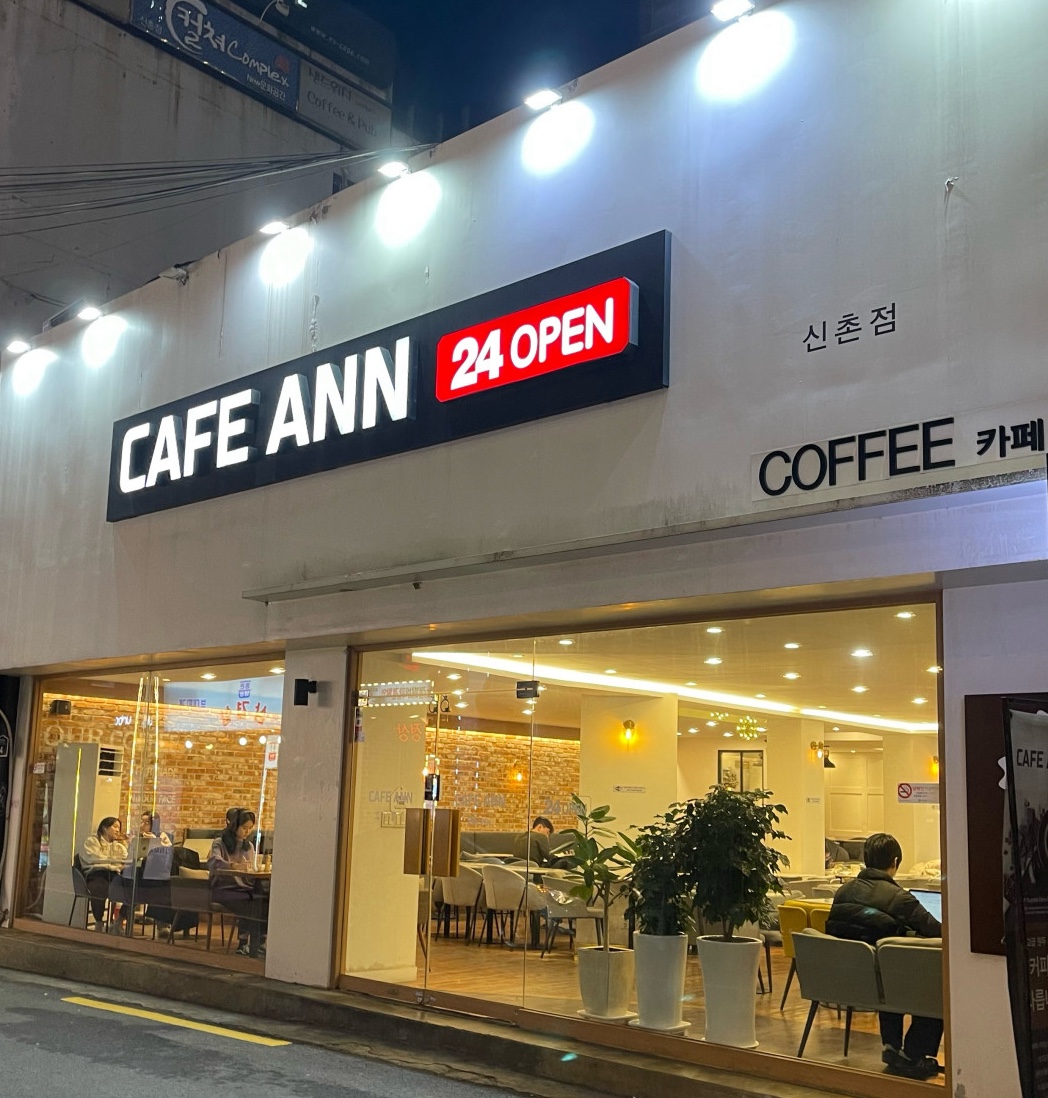
Over the course of a single day, the same café may quietly change roles — functioning as a workspace in the afternoon, a dessert spot after dinner, a study space near midnight, and a temporary resting place before the last subway home.
Practical Tips for Visitors Using Korean Cafes
Many cafés in Korea stay open significantly later than cafés in other countries, especially in Seoul. Some operate 24 hours, while others close well after midnight. Searching “24시 카페” on local map apps can help you find overnight cafés nearby. Apps like Naver Map and Kakao Map are usually more reliable than global map services for checking operating hours, reviews, and late-night business information in Korea.
Many cafés also provide charging outlets, free Wi-Fi, kiosk ordering systems, and seating designed for long stays — reflecting how normal it became for people to remain in cafés for hours at a time.
Study cafes are slightly different from ordinary cafés. Despite the name, they are designed primarily for focused work or studying rather than socializing. Conversation is usually discouraged, and some spaces operate almost silently. For travelers, ordinary cafés are often more comfortable unless you specifically want a quiet workspace.
What Korea’s Late-Night Cafe Culture Reveals About Modern Life
Korea’s cafe culture reveals much more than changing coffee preferences. It reflects how modern Korean cities organize time, productivity, rest, and social space.
People move constantly between work, school, transit, errands, and social obligations. Cafés help soften those transitions. They provide temporary stability inside schedules that often feel compressed and fast-moving.
The system is highly convenient, but also emotionally functional. A café can become a workspace, a meeting point, a study room, a temporary refuge, or simply somewhere to pause for an hour without explanation.
At the same time, the culture reflects certain tensions within modern Korean life. The popularity of late-night cafés is connected not only to convenience, but also to long working hours, competitive academic environments, solo living, and the growing need for flexible public spaces outside the home.
Still, the atmosphere rarely feels dramatic. Most nights, it simply looks ordinary: people continuing their conversations, opening laptops, ordering desserts, or waiting quietly for the next part of the night to begin.
A City That Extends the Day
In Korea, late-night cafes are not unusual exceptions. They are woven into the structure of everyday urban life — after dinner, before going home, between schedules, during study sessions, or on evenings when people are simply not ready for the day to end yet.
Understanding Korea’s late-night cafe culture ultimately means understanding how the city creates space for people to continue their day a little longer — between work, conversation, study, and rest.