Why Do Koreans Sleep on the Floor?
How everyday habits shape daily life
A Scene You’ve Probably Noticed
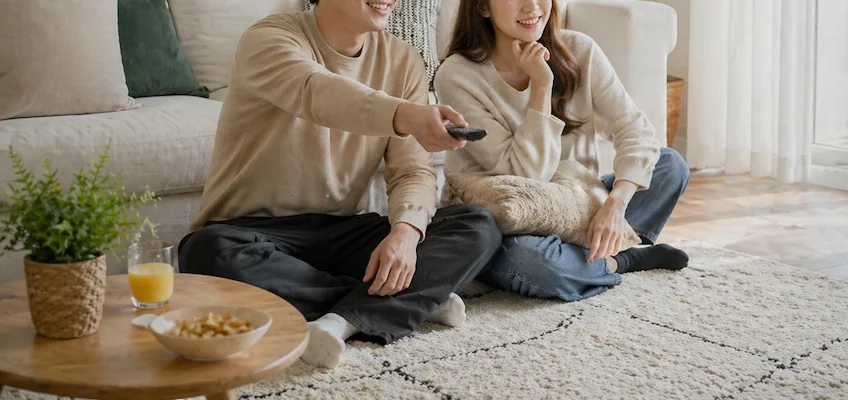
If you’ve watched a Korean drama, you might have noticed something subtle: people often sit on the floor, even when there’s a sofa nearby. Meals, conversations, even moments of rest—many happen close to the ground.
So why do Koreans sleep and sit on the floor?
The answer is simple: it comes from a combination of underfloor heating, everyday habits, and the way living spaces are used. Rather than being an unusual tradition, floor sleeping is part of a practical system that has shaped how homes function over time.
Why Do Koreans Sit and Sleep on the Floor?
In many Korean homes, sitting on the floor feels natural. It’s common to eat, relax, or spend time with others while seated on cushions around a low table. This way of living isn’t separate from sleeping—it’s connected.
One reason is ondol, the traditional Korean underfloor heating system that warms the floor from below. Because the floor stays warm, it becomes a comfortable place to sit or lie down, especially during colder months.
Over time, this naturally led to a simple idea: if the floor is already warm and comfortable, it also works as a sleeping space. Rather than dividing areas strictly into “sofa space” or “bedroom space,” the same area can serve multiple purposes throughout the day.
What Makes Floor Sleeping Comfortable in Korea?
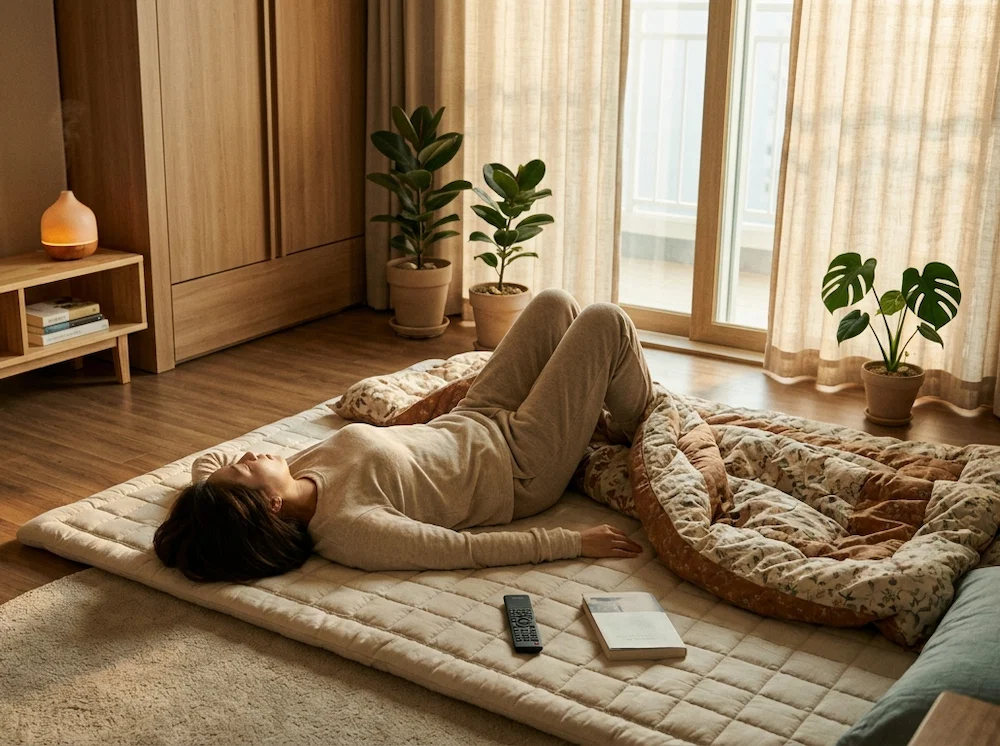
From the outside, “sleeping on the floor” might sound uncomfortable. But in Korea, it doesn’t mean lying directly on a cold, hard surface. Instead, comfort comes from how Korean homes are heated and lived in.
- Heat is often distributed from below the floor, creating a gentle, even warmth
- The surface stays consistently warm during winter
- Bedding (such as mats or blankets) adds a soft layer on top
This combination creates a different kind of comfort—less about softness, more about steady warmth and support. So it’s not just a cultural habit. It’s a practical system shaped by housing design, climate, and everyday use of space.
Do Koreans Still Sleep on the Floor Today?
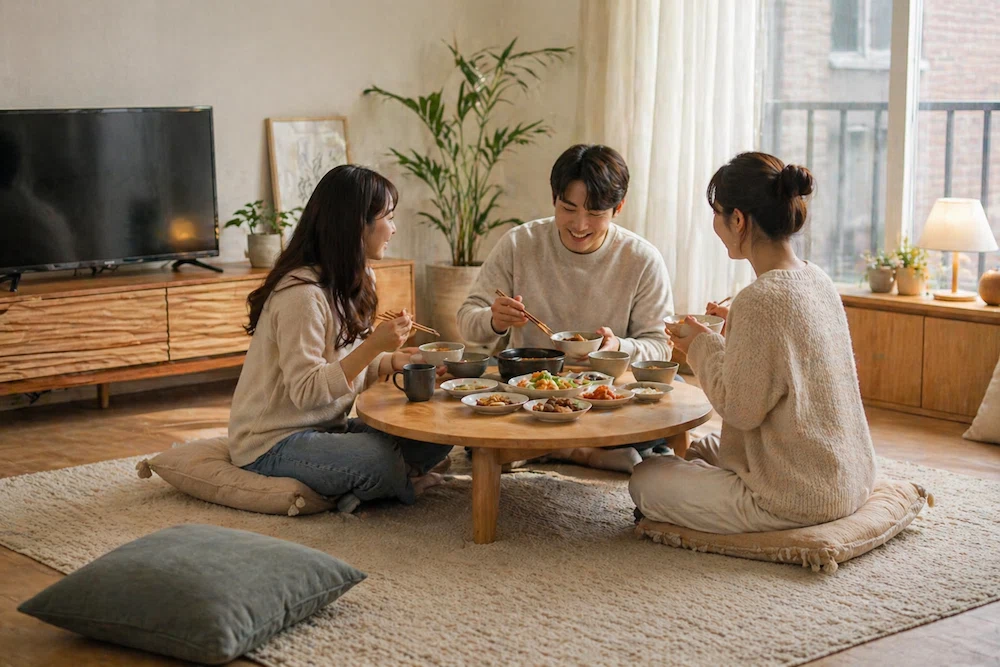
Today, many Korean homes use beds. In fact, bed use has become more common, especially in newer apartments.
But that doesn’t mean floor living has disappeared. Even in homes with beds, people often:
- Sit on the floor to eat or relax
- Lie down on the floor for short rests
- Use floor space flexibly throughout the day
This is where the influence of how Korean homes are designed still remains. Because the floor continues to function as a comfortable living surface, so spending time there still feels natural. So rather than one replacing the other, beds and floor living now coexist—depending on preference, space, and lifestyle.
Is Sleeping on the Floor Good for Your Body?
Some people wonder whether sleeping on the floor is actually better for the body. The answer depends on how it’s done—and what you’re used to.
– Potential Benefits
- Firm support can help keep the spine more aligned
- Less sinking compared to very soft mattresses
- Even weight distribution across the body
Because of this, some people find that a firmer surface feels more stable, especially for posture.
– Things to Keep in Mind
- It can feel uncomfortable at first if you’re used to soft beds
- Without enough cushioning, pressure points may develop
- Individual comfort varies depending on body condition
In short, floor sleeping isn’t automatically “better” or “worse.” It’s simply a different type of support—one that works well within the context of Korean homes.
Where Can You Experience Floor Sleeping?
If you’re curious, there are a few ways to experience this in Korea.
- Hanok stays (traditional Korean houses)
- Temple stays, which offer a quieter, more minimal setting
- Some guesthouses or cultural accommodations
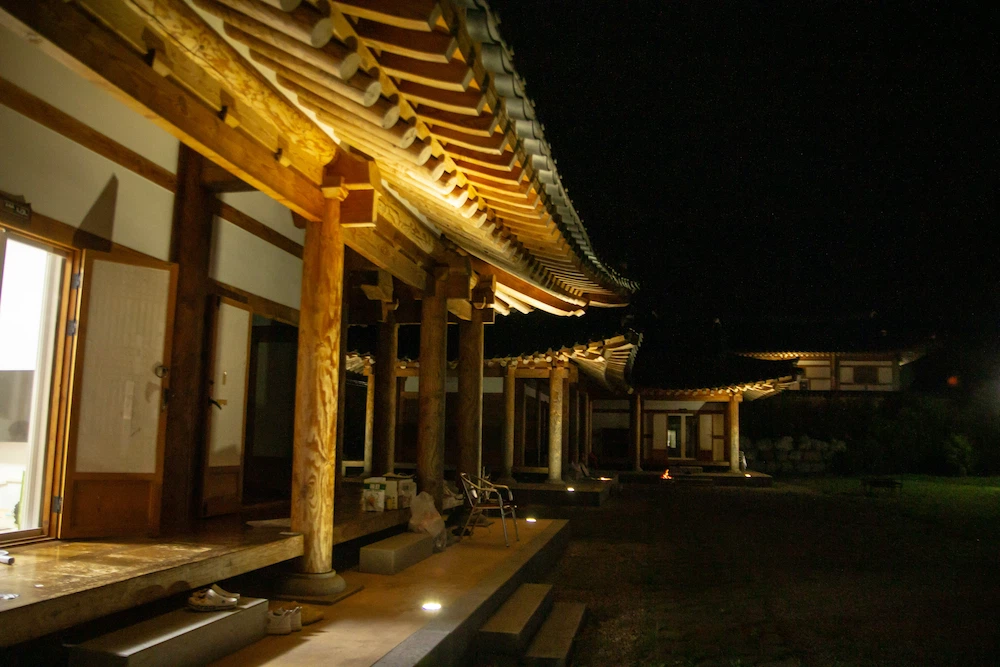
These spaces are designed around floor living, so the experience feels natural rather than forced. What many people notice first isn’t the firmness—it’s the warmth from below, especially in colder seasons.
Why Don’t Koreans Wear Shoes Indoors?
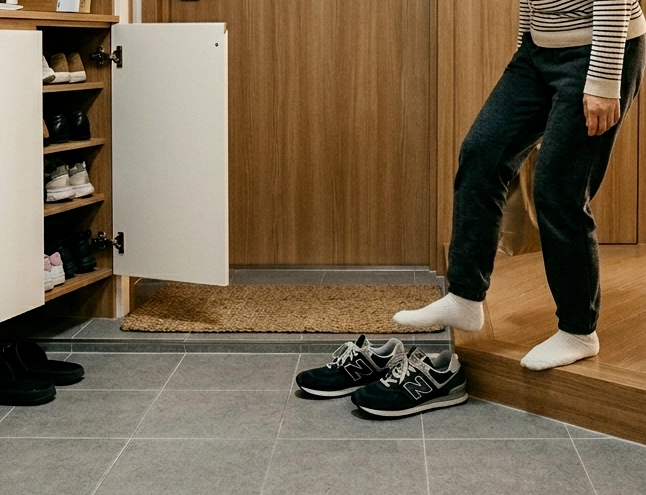
If people sit and sleep on the floor, one thing becomes obvious: shoes don’t belong there. In Korea, it’s standard to remove shoes before entering a home. This isn’t just about cleanliness—it’s directly connected to floor-based living.
- The floor is where people sit, eat, and rest
- Floor-based living works best when the surface is kept clean
- Daily life happens closer to the ground
Because of this, keeping the floor clean isn’t optional—it’s part of how the space is used.
A Different Kind of Comfort
Sleeping on the floor might feel unfamiliar at first. But in Korea, it makes sense within the way homes are designed and used.
It’s not about choosing something traditional over modern. It’s about what fits the space, the climate, and daily routines.
For some, comfort means a soft bed. For others, it’s a warm floor and a simple setup. Neither is better—they’re just different ways of living with the space around you. And sometimes, understanding that difference is enough to make it feel a little less unusual.